Are Sustainability Communications Shifting Toward a Content Ecosystem?
For years, organizations have relied on a single report to communicate their environmental, social and governance (ESG) priorities and performance. But operating on the assumption that a standalone publication can simultaneously serve investors, customers, employees and community members is optimistic at best and counterproductive at worst.
While the sustainability report remains an important foundation, it shouldn’t be the only way an organization communicates sustainability information. A “catch-all” report that attempts to meet the needs of every audience at once risks satisfying none.
As a result, leading companies are shifting toward an interconnected content ecosystem where the sustainability report is one of many approaches to communicating on sustainability topics. Digital and social assets, such as posts, articles, videos and other forms of interactive content, help tell a company’s sustainability story in different ways, across different channels, to meet audiences where they are.
Reimagining the disclosures architecture
Effective communications require understanding what your distinct audiences actually care about (and why). Institutional investors are likely looking for standardized ESG data, while employees might be seeking inspiring social impact stories, and some customers are looking for evidence of product circularity, ethical sourcing and other claims in digestible formats.
If these diverse needs are bundled into one publication, the essence gets lost in the noise.
Through our annual Insights research, we reviewed 100 companies across 14 sectors and identified forward-thinking organizations that are redefining the boundaries of sustainability communications. Here’s how two companies are building content ecosystems for their key audiences:
Henkel
Henkel, a German consumer goods company, is a great example of how companies can unbundle content and create audience-specific messaging that feels interconnected and helps communicate a cohesive narrative. The company took on this challenge by intentionally segmenting its sustainability content to serve the needs of different audiences, while creating digital pathways to guide readers and keep its sustainability communications connected.
At the beginning of its Sustainable Impact Report, Henkel provides a visual guide, complete with thumbnails and clear descriptions, of its content ecosystem, communicating how the different pieces support each other in telling the full message. Starting with a clearly defined purpose, its Sustainable Impact Report provides concrete examples of sustainability achievements and solutions to a broad audience, intended to supplement the more compliance-oriented sustainability statement within its Annual Report.
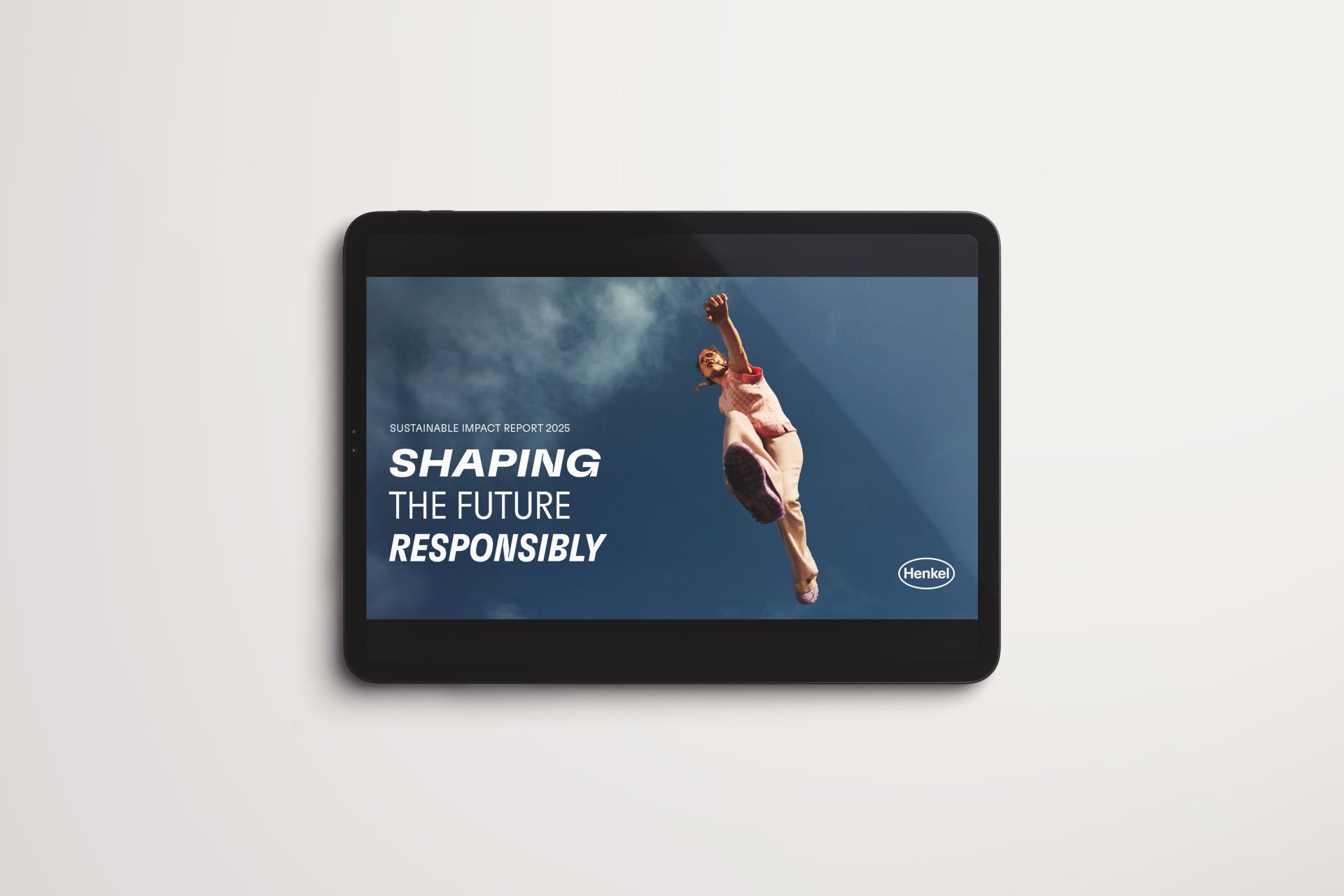
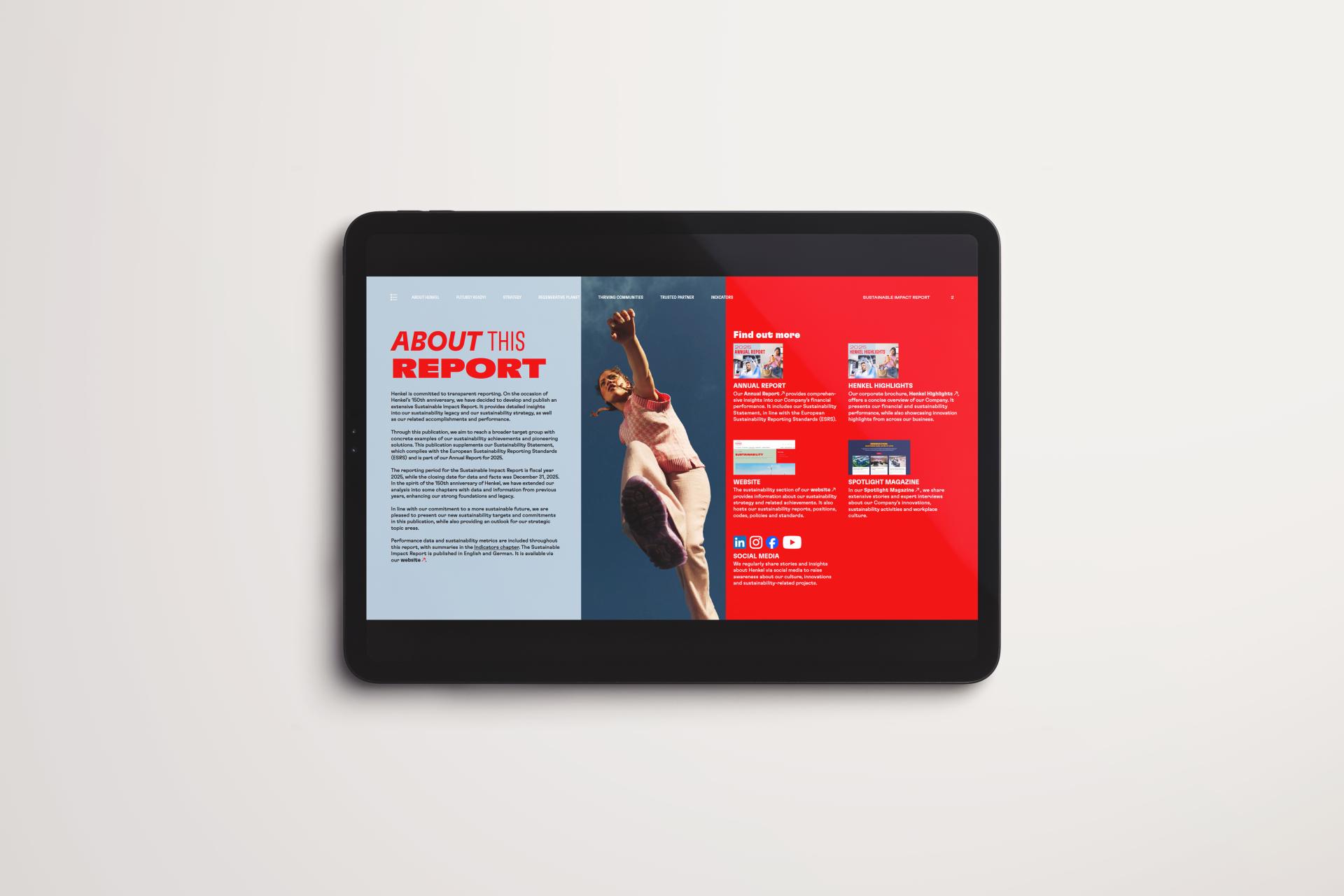
Beyond these core documents, Henkel extends its disclosures into dedicated digital hubs and social channels that combine videos, feature articles and ongoing conversations to engage audiences in different ways, acknowledging that where people go to absorb information and the format in which they absorb it best is not one-size-fits-all.
Patagonia
While not every company can be a Patagonia, it remains a north star for how companies can lean into their purpose and embrace transparent, audience-centric messaging.
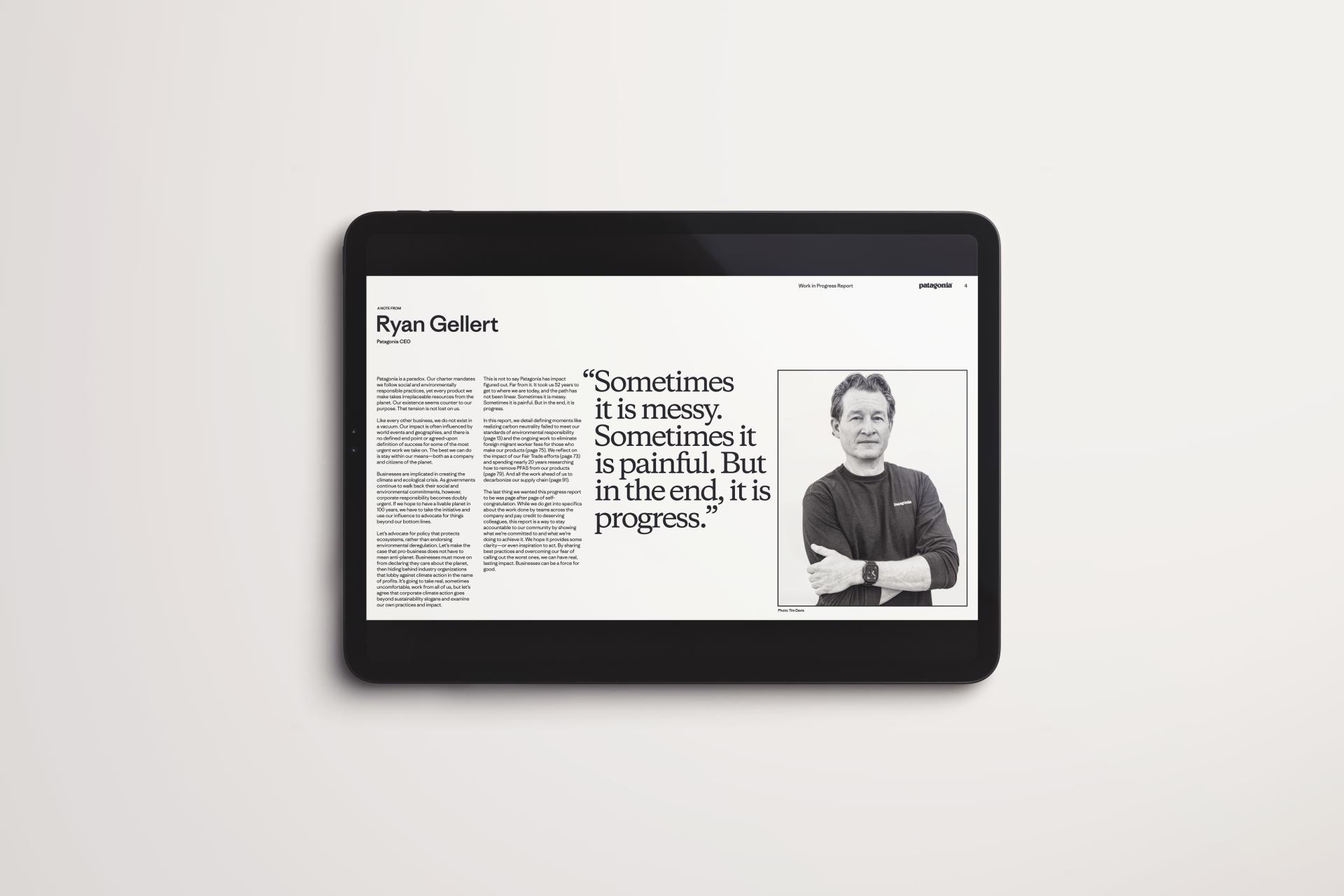
Patagonia recently released its first-ever Impact Report, and in typical Patagonia style, leaned heavily into its unique candour, titling its report Work in Progress. In the opening messages from its founder Yvon Chouinard and CEO Ryan Gellert, they acknowledge that its sustainability path has been non-linear and messy, including defining challenges such as Patagonia’s efforts to decarbonize its supply chain. The report dives deeper into these topics, taking an authentic narrative approach, further supported by design cues such as scribbled diagrams, handwritten notes, bold quotes and even a few curse words.
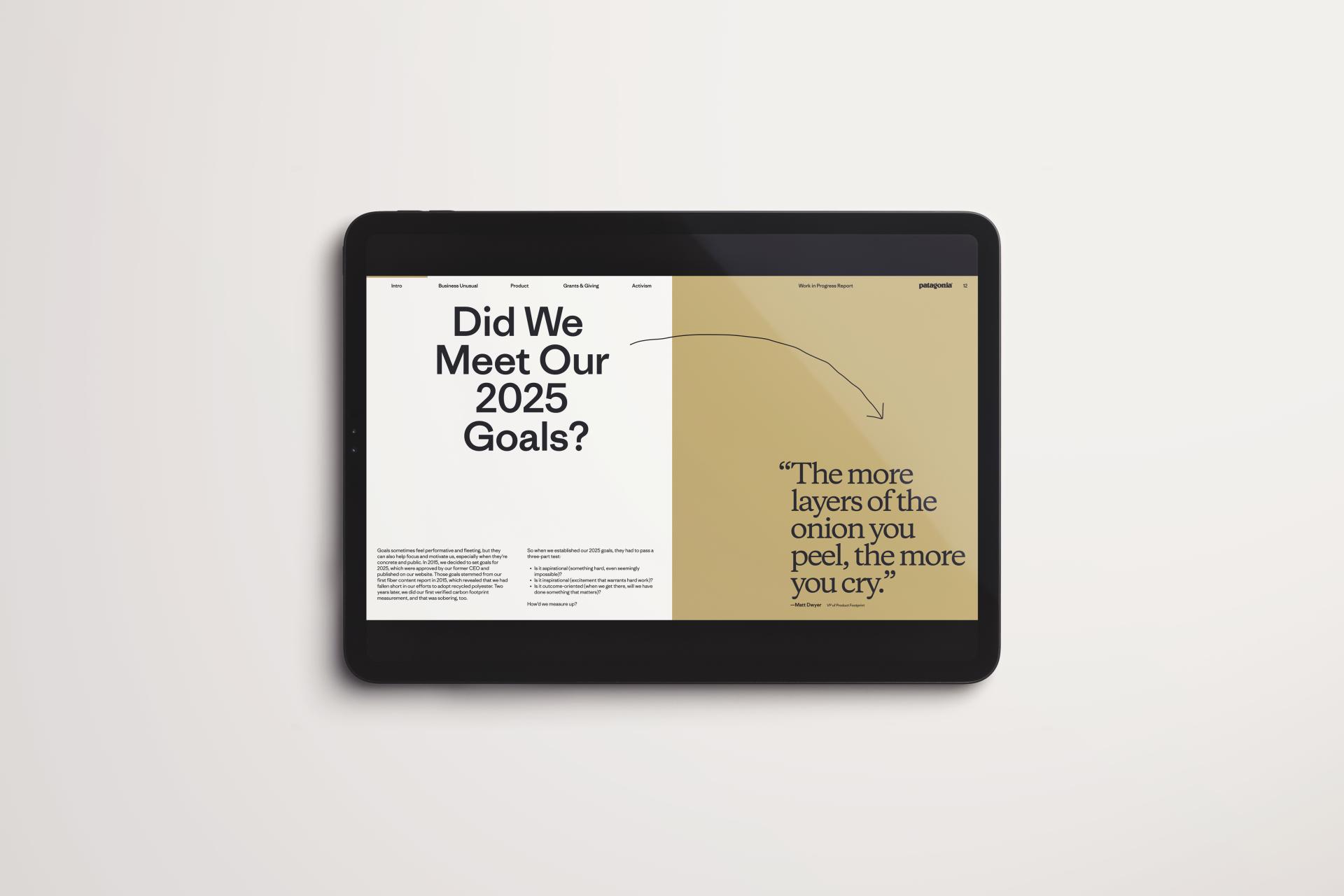
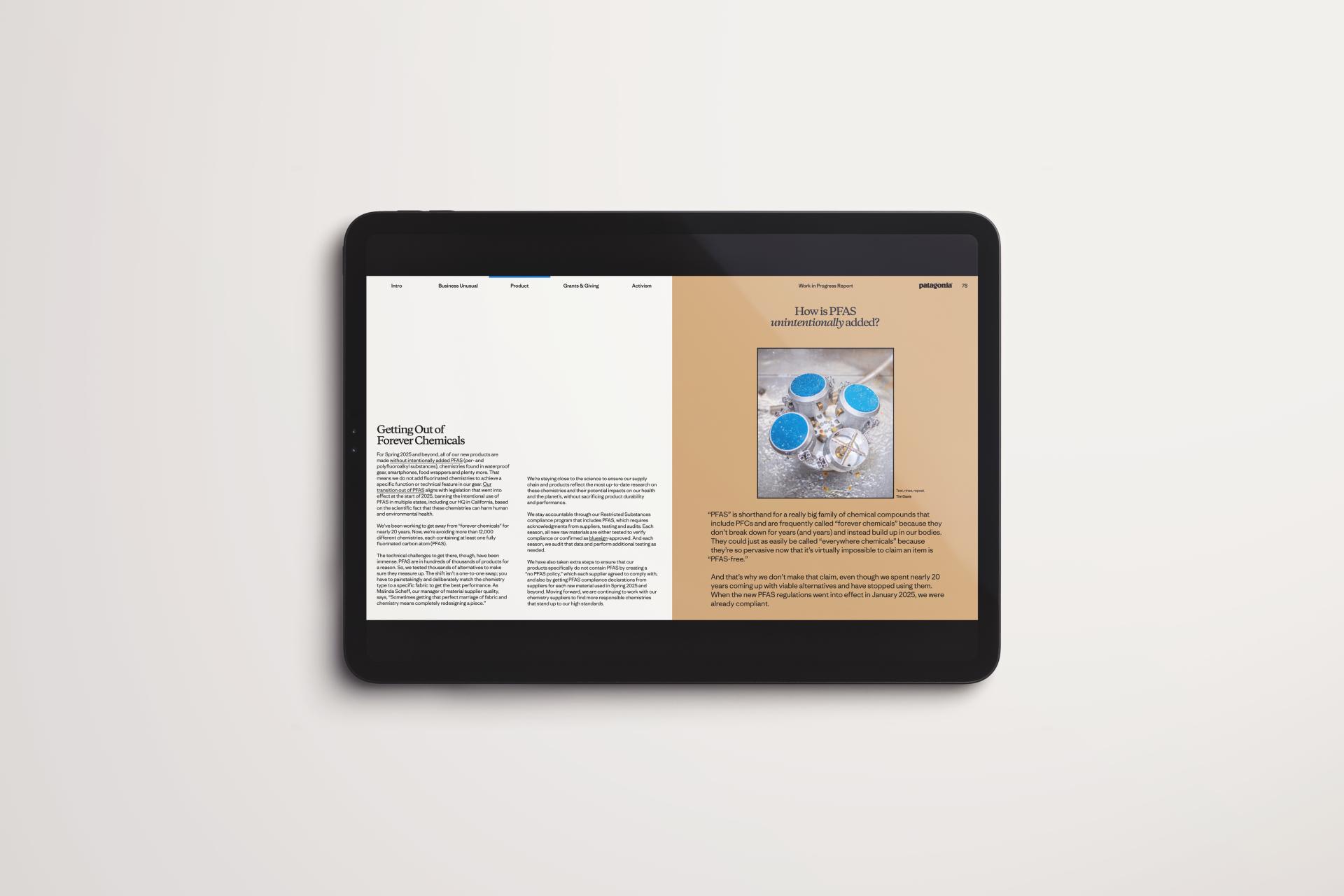
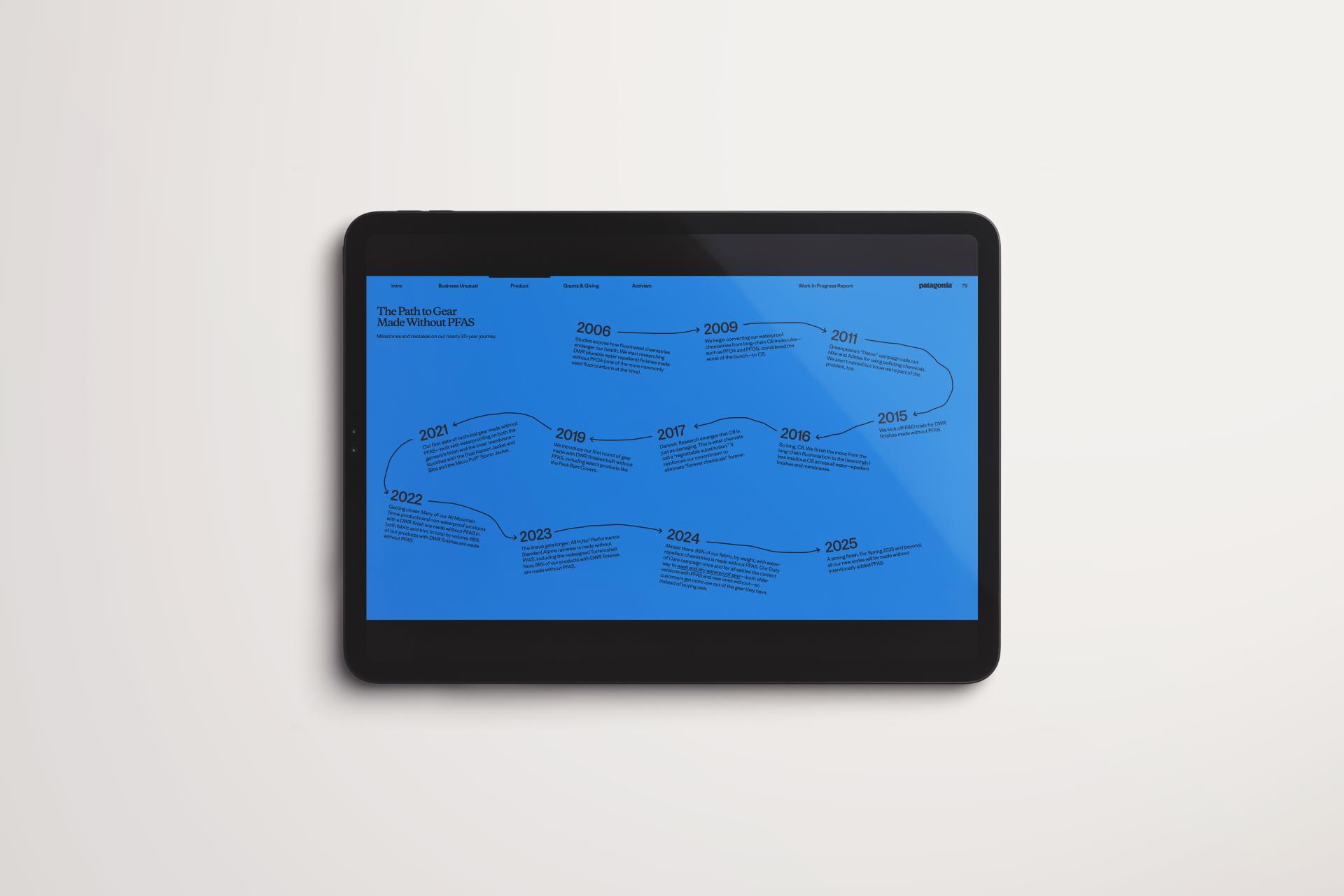
Patagonia doubles down on its communication efforts by hosting the report on a landing page where metrics and highlights blend seamlessly with photography and video, and where staff and leadership sit down for short interviews addressing direct customer criticisms, also shared on social channels. Through this web and social media strategy, Patagonia leverages bite-sized content to draw in audiences who might otherwise never open an impact or sustainability report.
Beyond reporting, Patagonia deploys evergreen creative assets year-round to spark and fuel critical conversations. Short films, including The Shitthropocene, tackle important issues in the fashion industry, such as hyper-consumption and product durability, with both candour and humour to reflect on industry norms and consumer habits. This creative and narrative-driven approach engages diverse audiences and keeps the dialogue going well beyond reporting season.
While Patagonia has certain liberties as a privately held company, its bold and brand-aligned approach to communications can serve as inspiration for other companies to communicate sustainability in authentic ways aligned with their own brands and disclosure requirements.
Recommendations for the path ahead
While the companies highlighted above use different approaches, both show how thinking beyond the traditional report creates space for creating ongoing innovative content and engaging broader audiences. It’s not easy, but shifting from a report to an ecosystem can improve communication, especially when considering these principles:
Anchor to a core narrative. Strong brands recognize that different audiences have different needs while staying anchored to a core narrative rooted in who they are. Rather than repeating the same report content across every channel, they use the report as a foundation for creating complementary content tailored to different formats, platforms and audiences. Clear boundaries give communications teams the flexibility to adapt their messaging while maintaining a consistent brand.
Align content with user preferences. To create assets that complement its report, a company first needs to understand what its key audiences are looking for and then pair that with the right channel, depth and format. Whether it’s sharing an employee success story on the intranet, an investor-focused executive Q&A post on LinkedIn or an analyst data pack on a web hub, sustainability information should be delivered in the way that feels most relevant to that reader.
Build intuitive content pathways. A content ecosystem should feel interconnected, making navigation as effortless as possible. Companies have different tools at their disposal to create a clear structure that integrates assets and demonstrates how they complement one another. For example, by including links to other reports and related sustainability stories across touchpoints, a company can minimize dead ends and create pathways that draw readers into further content.
Shifting toward a content ecosystem doesn’t mean the sustainability report is less relevant – its role is simply evolving. Rather than treating it as a final destination, companies can use it as a foundation for an ongoing communications experience that allows them to reach wider audiences and spark greater engagement.